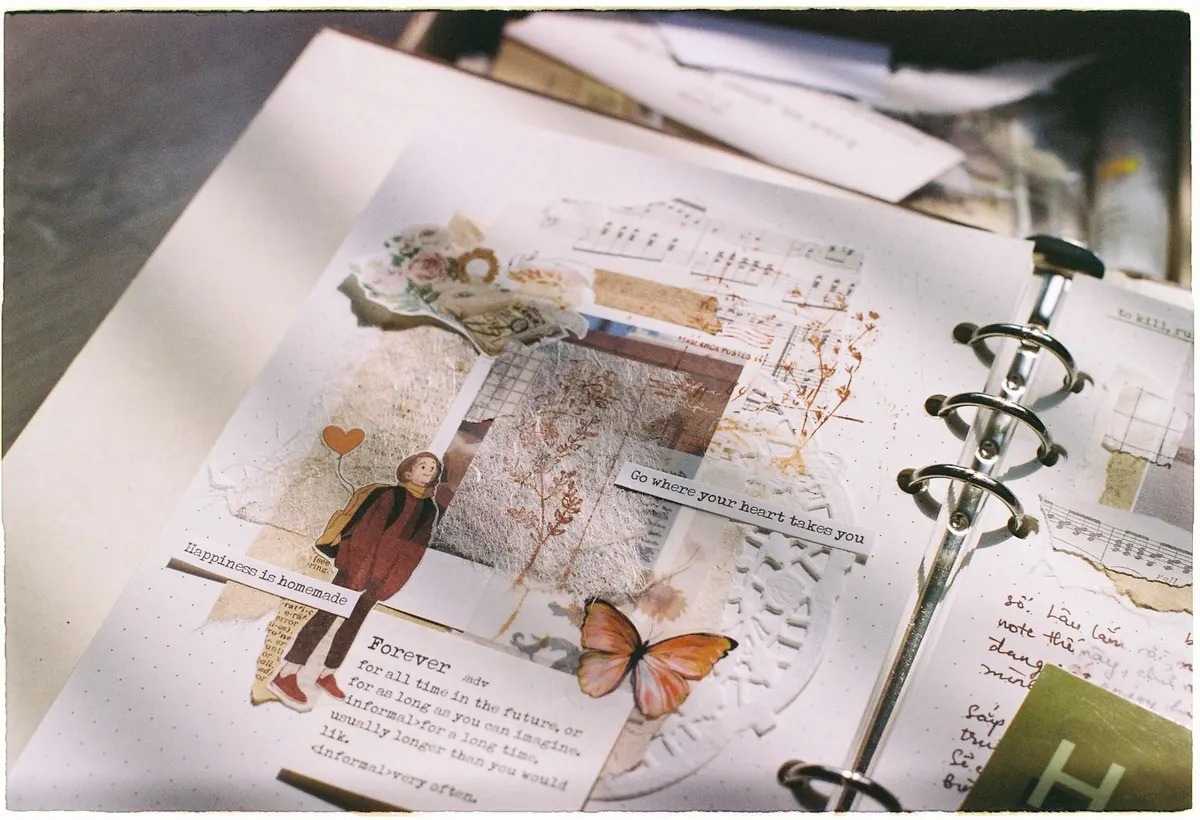
A daily journal does not need an hour, a special notebook or a quiet house. It needs ten minutes and a route to follow. The reason most entries stall is not laziness; it is the blank page problem — sitting down with no idea which of the day's four hundred small events deserves a line. A checklist removes that decision. Seven prompts, one line each, and the day is on paper before the kettle has finished boiling.
What follows is a checklist you can copy onto a bookmark, a sticky note inside the cover, or the back page of your journal. Tick the prompts as you go. Some evenings you will write half a page on one of them and rush the rest; other evenings every line will be short. Both count.
Three Ground Rules
- Set a timer for ten minutes. Not to rush you, but to stop the entry turning into a project. When it rings, finish the line you are on and close the book.
- One line is a complete answer. You are not writing an essay or a report. A single specific sentence beats three vague ones.
- Write for yourself only. No introductions, no tidying up the grammar, no explaining who your colleagues are. Future you will remember the context.
Write the date at the top before anything else. It takes four seconds and it is the difference between a journal you can re-read in a year and a stack of undated pages.
The Seven Prompts
The order matters more than you might expect: it moves from the concrete to the reflective, so you are never staring into the middle distance wondering what you feel. If a prompt produces nothing, write "nothing today" and move on. That is a real answer too.
- The first thing. What did you notice in the first ten minutes of the day? Rain on the window, a stiff shoulder, a thought that arrived before you were fully awake. Keep it physical rather than meaningful.
- The moment worth keeping. One scene you would be happy to remember in a year. Where were you, who was there, what could you hear? Small and specific: the last of the light on the kitchen wall, a colleague laughing at their own joke.
- What you actually did. Not the whole list — one thing you finished, decided, fixed, sent or started. Write it plainly. "Rang the dentist. Finally."
- Who mattered. One person you spoke to, or thought about and did not contact. A line about them, then a line about you in relation to them.
- The friction. What irritated, tired or slowed you down. Naming it takes some of the sting out and shows patterns over weeks. Stay factual: the meeting ran over, the printer jammed again, you slept badly.
- The thing you did not say. An observation or opinion that stayed in your head. This is often the most interesting line in the entry, and the one that makes re-reading worthwhile.
- What tomorrow needs. One sentence, one action, within your control. "Buy milk." "Ten minutes outside before the first call." Not a plan for the rest of the week.
Then finish with a single closing line: today in one sentence. It reads oddly at first and becomes the line you look for when you flick back through the notebook.
A Ten-Minute Entry, Start to Finish
Here is the checklist filled in after an unremarkable Wednesday. It took nine minutes, including the walk to find a pen.
Wed 14th. First thing: rain on the window and the bin lorry reversing. Kept: J making tea in the dark because the kitchen bulb has gone. Did: sent the quote I had been putting off for a week. Person: Dad, brief call, mostly about the garden. Friction: two hours lost to a spreadsheet that would not reconcile. Did not say: I think we should push the whole project back to spring. Tomorrow needs: new bulb, fifteen minutes on the spreadsheet before email.
One sentence: a slow day with one small win.
Nothing there is dramatic. Read thirty entries like it in a row, though, and you have something a camera roll cannot give you: evidence of what actually changed, what kept repeating, and what you cared about during a particular season of your life.
If You Miss a Day (or a Week)
Missed evenings are normal and they are not a failure of character. The habit breaks when you try to repay the debt. Catching up on four days in one sitting takes forty minutes, feels like homework, and puts you off opening the notebook again.
So skip it. Either write nothing, or write one line — "missed Tuesday, no idea why" — and carry on with tonight. If you have ignored the journal for a fortnight, do not start again from page one or buy a nicer notebook. Open it at tonight's date and run the seven prompts. If a prompt keeps surfacing something painful, note it down and consider talking it through with someone you trust, or with your GP if it recurs.
Adjust the Checklist to Fit Your Life
Two small edits make the whole thing stick. First, rename any prompt that does not fit: if you work alone from home, "who mattered" can become "who I thought about"; if you prefer journalling in the morning, flip the last prompt to "what today needs". Second, notice which prompt you consistently skip. After a fortnight, that blank space is telling you something — either the question is wrong for you, or it is the one you least want to answer. Replace the first; sit with the second for a few days before deciding.
Keep the checklist itself to one page and keep it visible, taped inside the cover rather than buried at the back. A prompt list you have to hunt for will not survive the first busy week.
Ten Minutes, Every Evening
The value of a daily entry is not literary. It is that the day gets marked, briefly and honestly, instead of dissolving into the general blur of the month. Seven lines are enough to hold a day in place, and ten minutes is short enough that you will still do it on the evenings you cannot be bothered.
Try it tonight. Timer, seven prompts, one page. If it takes eleven minutes, nobody is marking it.
Photo: Rahul Shah / Pexels